














What’s a rechargeable battery?
A rechargeable battery is a type of battery that can be recharged and reused multiple times. Unlike disposable batteries, which are designed for single use and then discarded, rechargeable batteries can be charged with electricity to restore their energy and used again. This makes them more cost-effective and environmentally friendly compared to disposable batteries. Rechargeable batteries are commonly used in electronic devices such as smartphones, laptops, cameras, and portable gaming consoles.
Rechargeable battery categories
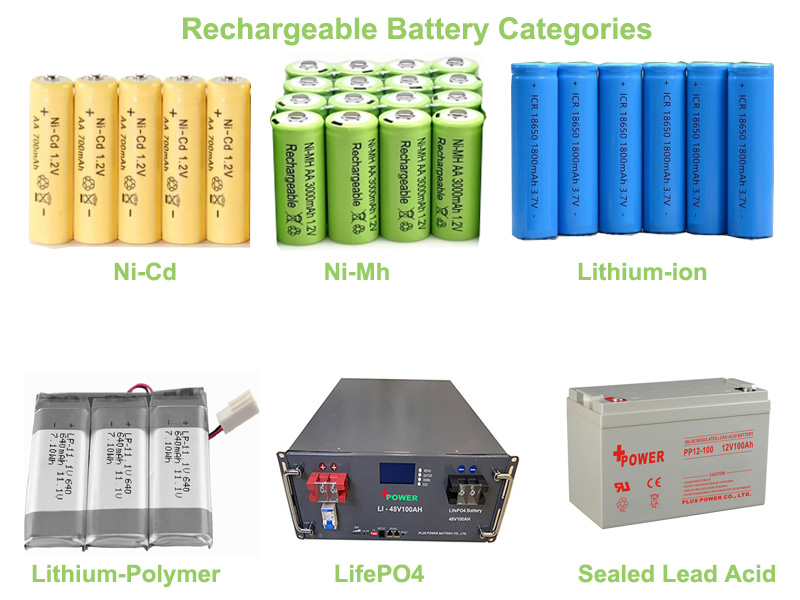
Rechargeable batteries can be categorized into several types based on their chemistry and construction. Here are some common categories of rechargeable batteries:
Nickel-Cadmium (Ni-Cd) Batteries: Ni-Cd batteries have been widely used in the past but are less common now due to environmental concerns. They have a high energy density and can withstand high discharge rates. However, they suffer from the “memory effect,” which reduces their capacity if not fully discharged before recharging.
Nickel-Metal Hydride (Ni-MH) Batteries: Ni-MH batteries are an improvement over Ni-Cd batteries and are still commonly used today. They have a higher energy density, no memory effect, and are more environmentally friendly. Ni-MH batteries are often used in portable electronics, such as cameras, toys, and cordless phones.
Lithium-Ion (Li-ion) Batteries: Li-ion batteries are widely used in modern electronic devices due to their high energy density, lightweight, and lack of memory effect. They have a longer lifespan compared to Ni-MH batteries and are commonly found in smartphones, laptops, tablets, and electric vehicles.
Lithium Polymer (Li-Po) Batteries: Li-Po batteries are a variation of Li-ion batteries that use a polymer electrolyte instead of a liquid electrolyte. They are thinner, lighter, and more flexible, making them suitable for slim devices like smartphones and wearable technology.
Lead-Acid Batteries: Lead-acid batteries are commonly used in applications that require high current and deep cycling, such as automotive starting batteries and uninterruptible power supplies (UPS). They are heavy and have a lower energy density compared to other rechargeable battery types.
These are just a few examples of rechargeable battery categories. Each type has its own advantages and disadvantages, and the choice of battery depends on the specific requirements of the device or application.
Which types of rechargeable batteries are popular in the market?
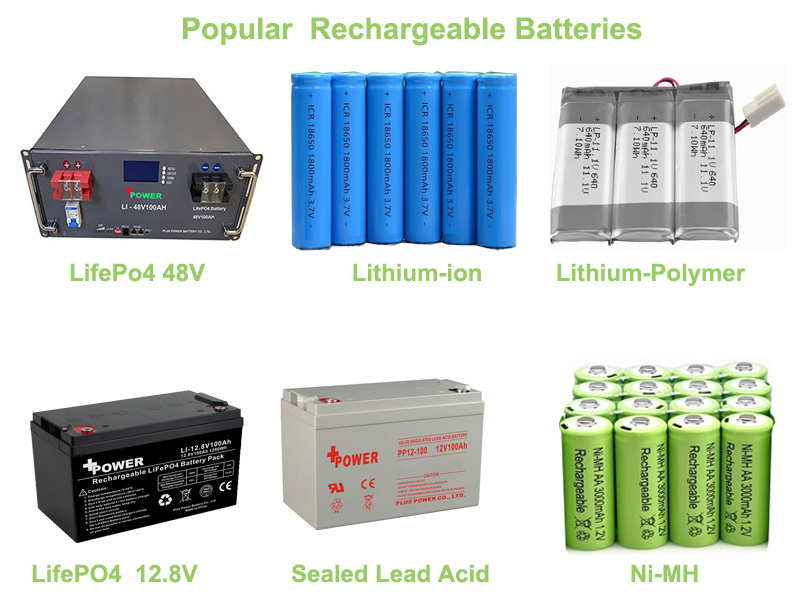
In the current market, the most popular types of rechargeable batteries are:
Lithium-Ion (Li-ion) Batteries: Li-ion batteries are widely used in various electronic devices due to their high energy density, lightweight design, and long lifespan. They are commonly found in smartphones, laptops, tablets, digital cameras, power tools, and electric vehicles.
Nickel-Metal Hydride (Ni-MH) Batteries: Ni-MH batteries are still popular and widely used, especially in devices that require moderate power consumption. They are commonly used in cordless phones, digital cameras, portable gaming devices, and toys.
Lithium Polymer (Li-Po) Batteries: Li-Po batteries are gaining popularity, particularly in slim and lightweight devices like smartphones, tablets, and wearable technology. Their flexible and thin design makes them suitable for compact and space-constrained applications.
Lead-Acid Batteries: Lead-acid batteries are popular in applications that require high current and deep cycling, such as automotive starting batteries, marine batteries, and backup power systems.
While these are the most popular types of rechargeable batteries in the market, it’s important to note that the popularity of battery types can vary depending on the specific industry, application, and technological advancements.
The applications for the rechargeable batteries
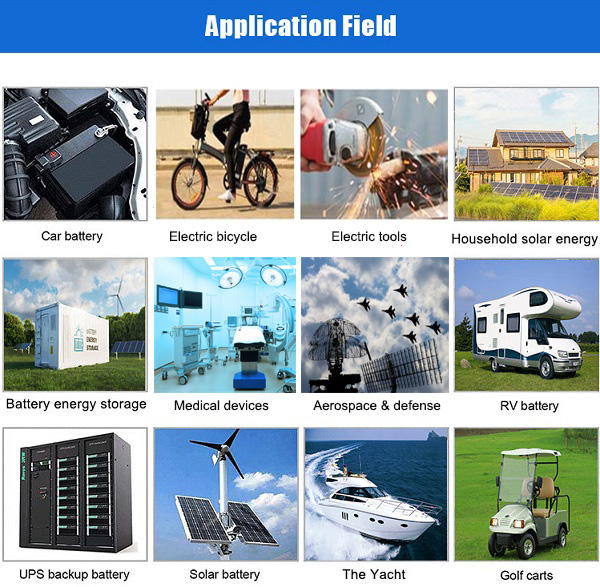
Rechargeable batteries have a wide range of applications across various industries. Here are some common applications for rechargeable batteries:
Portable Electronics: Rechargeable batteries are extensively used in portable electronic devices such as smartphones, tablets, laptops, digital cameras, portable gaming consoles, and MP3 players. These batteries provide the necessary power for these devices to operate without the need for constant connection to a power source.
Electric Vehicles (EVs): Rechargeable batteries, particularly lithium-ion batteries, are a key component in electric vehicles. They store the energy needed to power the vehicle’s electric motor, allowing for emission-free transportation. EVs include electric cars, electric bikes, electric scooters, and electric buses.
Renewable Energy Storage: Rechargeable batteries play a crucial role in storing energy generated from renewable sources such as solar panels and wind turbines. These batteries store excess energy during times of low demand or high generation and release it when needed, helping to balance the grid and provide a consistent power supply.
Backup Power Systems: Rechargeable batteries are used in backup power systems, such as uninterruptible power supplies (UPS), to provide temporary power during outages or fluctuations in the main power supply. These systems are commonly used in data centers, hospitals, telecommunications infrastructure, and critical facilities.
Power Tools: Rechargeable batteries are widely used in power tools such as cordless drills, saws, and screwdrivers. These batteries provide the necessary power for these tools to operate without the need for a constant connection to an electrical outlet, offering convenience and portability.
Medical Devices: Rechargeable batteries are used in various medical devices, including portable oxygen concentrators, insulin pumps, hearing aids, and electric wheelchairs. These batteries provide reliable power for essential medical equipment, allowing patients to maintain their mobility and independence.
Aerospace and Defense: Rechargeable batteries are used in aerospace and defense applications, including satellites, unmanned aerial vehicles (UAVs), military equipment, and spacecraft. These batteries provide power for communication systems, navigation equipment, and other critical functions.
These are just a few examples of the wide range of applications for rechargeable batteries. As technology advances, the use of rechargeable batteries continues to expand into new industries and applications.
How to find a good rechargeable battery manufacturer in China?
To find a good rechargeable battery manufacturer in China, you can follow these steps:
Research and Identify Potential Manufacturers: Start by conducting thorough research to identify potential rechargeable battery manufacturers in China. You can use online directories, trade platforms, industry associations, and trade shows to find a list of manufacturers. Pay attention to their reputation, experience, certifications, and product range.
Evaluate Manufacturer’s Capabilities: Once you have a list of potential manufacturers, evaluate their capabilities. Look for manufacturers that specialize in the type of rechargeable battery you require, such as lithium-ion or nickel-metal hydride. Consider factors such as production capacity, quality control processes, research and development capabilities, and manufacturing facilities.
Check Certifications and Standards: Ensure that the manufacturer holds relevant certifications and complies with international standards for battery manufacturing. Look for certifications such as ISO 9001 for quality management systems and ISO 14001 for environmental management systems. Compliance with standards like UL (Underwriters Laboratories) or CE (Conformité Européene) can also be important for certain markets.
Request Samples and Testimonials: Request samples of the rechargeable batteries from the manufacturers you are considering. Test the samples for performance, durability, and reliability. Additionally, ask for testimonials or references from their existing clients to get an idea of their reputation and customer satisfaction.
Communication and Support: Evaluate the manufacturer’s communication and support capabilities. Ensure that they have a responsive and professional customer service team that can address your inquiries and provide technical support when needed. Clear communication is crucial for a successful partnership.
Quality Control and Testing: Inquire about the manufacturer’s quality control processes and testing procedures. A reliable manufacturer should have strict quality control measures in place to ensure consistent product quality. Ask about their testing equipment, protocols, and certifications.
Pricing and MOQ: Discuss pricing and minimum order quantity (MOQ) requirements with the manufacturers. Compare the pricing and MOQs offered by different manufacturers to find the best balance between cost and quality.
Visit the Manufacturer: If possible, consider visiting the manufacturer’s facilities in China to assess their production capabilities, quality control processes, and overall operations. This will give you a firsthand understanding of their manufacturing capabilities and build trust in the partnership.
Negotiate and Sign Contracts: Once you have selected a manufacturer, negotiate the terms and conditions, including pricing, payment terms, delivery schedules, and any other specific requirements. Ensure that all agreements are documented in a formal contract to protect both parties.
Remember to conduct due diligence and thoroughly vet potential manufacturers before entering into any business agreements. It’s also advisable to consult with industry experts or engage the services of a sourcing agent or consultant who can help you navigate the process and ensure a successful partnership.
The advantages of the Plus Power rechargeable batteries
Plus Power rechargeable batteries come with several advantages:
Cost-Efficiency: They are economical in the long run as they can be recharged multiple times, reducing the need for frequent battery replacements.
Environmental Friendliness: Rechargeable batteries are more sustainable as they reduce the number of disposable batteries being thrown away, thus minimizing environmental impact.
Convenience: They offer the convenience of being reused multiple times after recharging, eliminating the hassle of constantly buying new batteries.
Performance: Plus Power rechargeable batteries often have a high capacity and maintain their voltage well during use, providing reliable power for various devices.
Versatility: They can be used in a wide range of devices, from small electronics like remote controls and flashlights to more power-demanding gadgets like cameras and gaming controllers.
Long-Term Use: With proper care, rechargeable batteries can last for years, providing a consistent power source for your devices.
Reduced Waste: By opting for rechargeable batteries, you contribute to reducing the amount of battery waste that ends up in landfills, which is beneficial for the environment.
These advantages make Plus Power rechargeable batteries a practical and environmentally friendly choice for powering your electronic devices.