













What’s 10KW On-grid Solar Systems
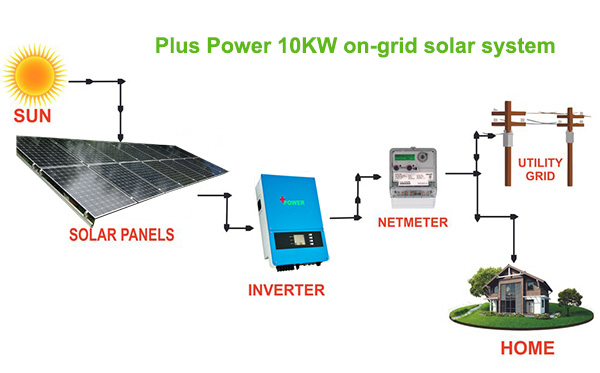
A 10KW on-grid solar system, often referred to as a 10-kilowatt on-grid solar system, is a type of solar power installation that generates electricity from the sun’s energy and is connected to the electric grid. Let me break it down for you:
Capacity: The “10KW” in the term stands for 10 kilowatts, which is a measure of the system’s capacity. A 10-kilowatt system can generate 10,000 watts of electricity when operating at its peak capacity. This is a relatively large residential or small commercial system.
Solar Panels: This type of system typically consists of an array of solar panels, which are usually mounted on the roof of a building or on the ground. These panels contain photovoltaic cells that convert sunlight into electricity.
On-Grid (Grid-Tied): An on-grid solar system is connected to the local electric grid. This means that when your solar panels generate excess electricity, it can be fed back into the grid, and when your panels aren’t producing enough power (e.g., at night), you can draw electricity from the grid. This grid connection allows you to take advantage of net metering, where you receive credits for the excess electricity you generate.
Key Benefits:
Reduced Electricity Bills: By generating your own electricity, you can reduce your reliance on the grid and lower your electricity bills.
Environmentally Friendly: Solar power is a clean and renewable energy source, which reduces your carbon footprint.
Financial Incentives: Many regions offer incentives, tax credits, or rebates to encourage the installation of solar panels.
Net Metering: With on-grid systems, you can benefit from net metering, which can further reduce your electricity costs.
Sizing: A 10KW system is relatively large and can meet the electricity needs of a typical home or small business, depending on energy consumption and location. The exact size of the system you need will depend on factors like your energy usage, location, and the available roof or ground space for panels.
Professional Installation: Installing a solar system of this size usually requires professional installation to ensure it’s set up correctly and safely.
Keep in mind that the performance and financial benefits of a solar system can vary based on factors like your location, the direction and angle of your solar panels, and local utility rates. It’s a good idea to consult with a solar installer to determine the best system size for your specific needs and to assess the feasibility and potential savings of a 10KW on-grid solar system for your situation
Which parts included to a 10KW on-grid solar system
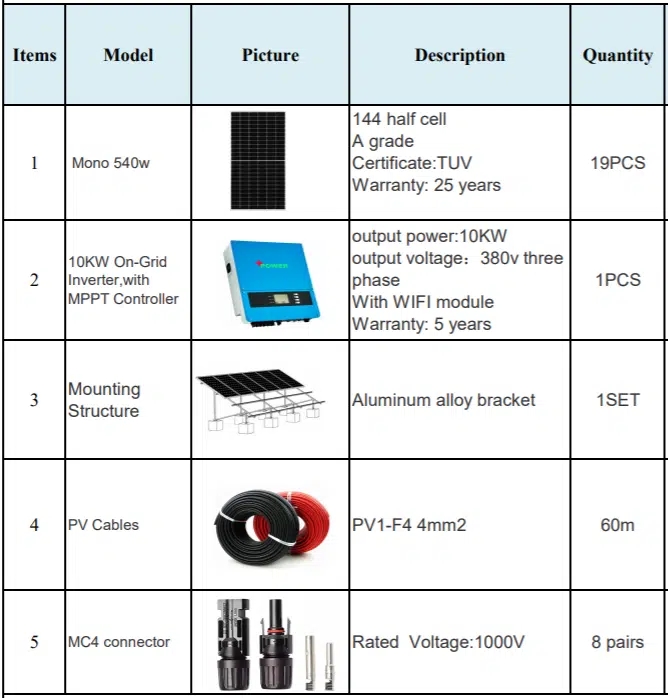
A 10KW on-grid solar system typically consists of several key components and equipment to generate electricity from sunlight and feed it into the electrical grid. Here are the main parts included in such a system:
Solar Panels (PV Modules): These are the most visible part of the system. Solar panels are composed of photovoltaic cells that convert sunlight into electricity. A 10KW system would typically include multiple solar panels, usually mounted on the roof or on the ground.
Mounting Structure: Solar panels need to be securely mounted in a way that optimizes their exposure to sunlight. Mounting structures, such as racks or frames, hold the panels in place and allow for adjustment to achieve the best angle and orientation for solar energy capture.
Inverter: The inverter is a crucial component that converts the direct current (DC) electricity produced by the solar panels into alternating current (AC) electricity, which is what your home or business uses and what the grid operates on. There may be one central inverter for the entire system, or micro-inverters attached to individual panels.
DC Disconnect Switch: This is a safety device that allows you to disconnect the DC power supply from the solar panels. It is typically installed near the panels and is used for maintenance or in emergencies.
AC Disconnect Switch: Similar to the DC disconnect switch, the AC disconnect allows you to disconnect the AC power generated by the inverter from the grid. It’s typically installed near the inverter and is used for maintenance or in case of grid maintenance or power outages.
Bi-Directional Meter: This special utility meter measures the electricity your system generates and the electricity you use from the grid. It’s essential for net metering, which allows you to receive credits for excess electricity you feed back into the grid.
Wiring and Cables: Various types of electrical wiring and cables are used to connect the components of the system. These include DC wiring between the panels and inverter and AC wiring for the connection to the electrical panel in your building.
Grounding Equipment: Grounding is important for safety. Grounding equipment includes rods, wires, and other components to ensure the system is properly grounded to prevent electrical hazards.
Electrical Panel: The electrical panel in your building may need to be upgraded or modified to accommodate the solar system. This panel is where the AC power from the inverter is integrated with your building’s electrical system.
Monitoring System: Many modern solar systems come with monitoring equipment that allows you to track the performance of your system, including the electricity production, to ensure it’s operating efficiently.
Surge Protection: Surge protectors help safeguard your system from power surges and voltage spikes.
Optional Backup Battery: Some on-grid systems include battery storage to store excess electricity for use during power outages or at night when the panels aren’t producing power.
Permits and Installation: Professional installation and necessary permits are critical for the safe and legal setup of your 10KW on-grid solar system.
The specific components and their sizes will vary based on factors such as your energy needs, location, and the type of solar panels and inverters you choose. It’s essential to work with a qualified solar installer who can design and install a system tailored to your requirements and local regulations.

How to install the 10KW on-grid solar system?
The installation of a 10KW on-grid solar system is a complex process that should be carried out by qualified professionals. It involves several steps, from planning and design to the physical installation of components. Here is an overview of the installation process:
Site Assessment:
Evaluate the site where the solar panels will be installed. Ensure the roof or ground area is structurally sound and has adequate space and proper orientation for the panels to receive maximum sunlight.
Consider any shading issues from nearby trees, buildings, or obstacles, and assess the available space for mounting structures.
Design and Permitting:
Create a detailed system design that specifies the placement of solar panels, inverters, and all necessary components.
Prepare and submit the required permits to local authorities and your utility company. Permits typically include building permits, electrical permits, and interconnection agreements with the utility.
Acquire Equipment:
Purchase all the necessary equipment, including solar panels, inverters, mounting structures, wiring, and other components.
Ensure that all equipment meets local codes and standards.
Roof or Ground Mounting:
Install the mounting structures for the solar panels on the roof or ground, following the design plans. Ensure they are securely attached and properly angled for optimal sun exposure.
Electrical Wiring:
Connect the solar panels to the mounting structures and route the DC wiring to the inverter(s).
Install the inverter(s) and connect them to the DC wiring. Ensure that the inverter(s) are properly grounded.
AC Wiring and Connection:
Route the AC wiring from the inverter(s) to the electrical panel in your building. This connection will enable the solar-generated electricity to feed into your electrical system.
Install Disconnects and Safety Equipment:
Install DC and AC disconnect switches for safety and maintenance purposes.
Set up surge protection and other safety devices as necessary.
Testing and Commissioning:
Thoroughly test the entire system to ensure it’s functioning correctly.
Verify that the inverter is converting DC electricity to AC electricity and synchronizing with the grid.
Check the grounding and wiring for safety and efficiency.
Interconnection with the Grid:
Coordinate with your utility company to have a bi-directional meter installed.
The utility company will need to approve the interconnection of your solar system to the grid.
Monitoring and Maintenance:
Set up a monitoring system to track the performance of your solar system.
Develop a maintenance schedule to ensure the system continues to operate efficiently and safely. Maintenance typically includes cleaning panels, checking for loose connections, and monitoring inverter performance.
Final Inspection and Approval:
Schedule a final inspection with local authorities to ensure the system meets all building and electrical codes.
Once the system passes inspection and receives utility approval, it can be officially connected to the grid.
Please note that this is a simplified overview of the installation process. The installation of a 10KW on-grid solar system can be highly technical and may require specialized knowledge of electrical and structural systems. It’s strongly recommended to hire a professional solar installer or solar company to ensure a safe and efficient installation that complies with all local regulations and safety standards.