













What’s a 25KW hybrid solar system?
A 25KW hybrid solar system typically refers to a solar power setup with a capacity of 25 kilowatts (kW) that combines both photovoltaic (PV) solar panels and an energy storage system, such as batteries. Here’s a breakdown of the components:
Solar Panels (PV): These are the devices that convert sunlight into electricity. In a 25KW system, there would be a substantial number of solar panels, each generating a certain amount of power.
Inverter: Solar panels produce direct current (DC) electricity, but most household appliances and the electricity grid use alternating current (AC). An inverter is used to convert the DC electricity generated by the solar panels into AC electricity.
Energy Storage System (Batteries): The hybrid aspect of the system comes from the inclusion of energy storage, usually in the form of batteries. This allows the excess electricity generated during sunny periods to be stored for later use when the sun is not shining, such as during the night or on cloudy days.
Controller/Charge Controller: This device manages the charging and discharging of the batteries, ensuring they are charged optimally and protecting them from damage.
Monitoring System: Many solar installations include a monitoring system that allows homeowners or system operators to track the performance of the solar panels, inverter, and energy storage system.
The term “hybrid” in this context signifies the integration of solar panels with energy storage, providing a more reliable and continuous power supply. This can be particularly beneficial in areas with intermittent sunlight or for individuals seeking energy independence from the traditional power grid. The 25KW capacity indicates the maximum power output the system can generate under optimal conditions.
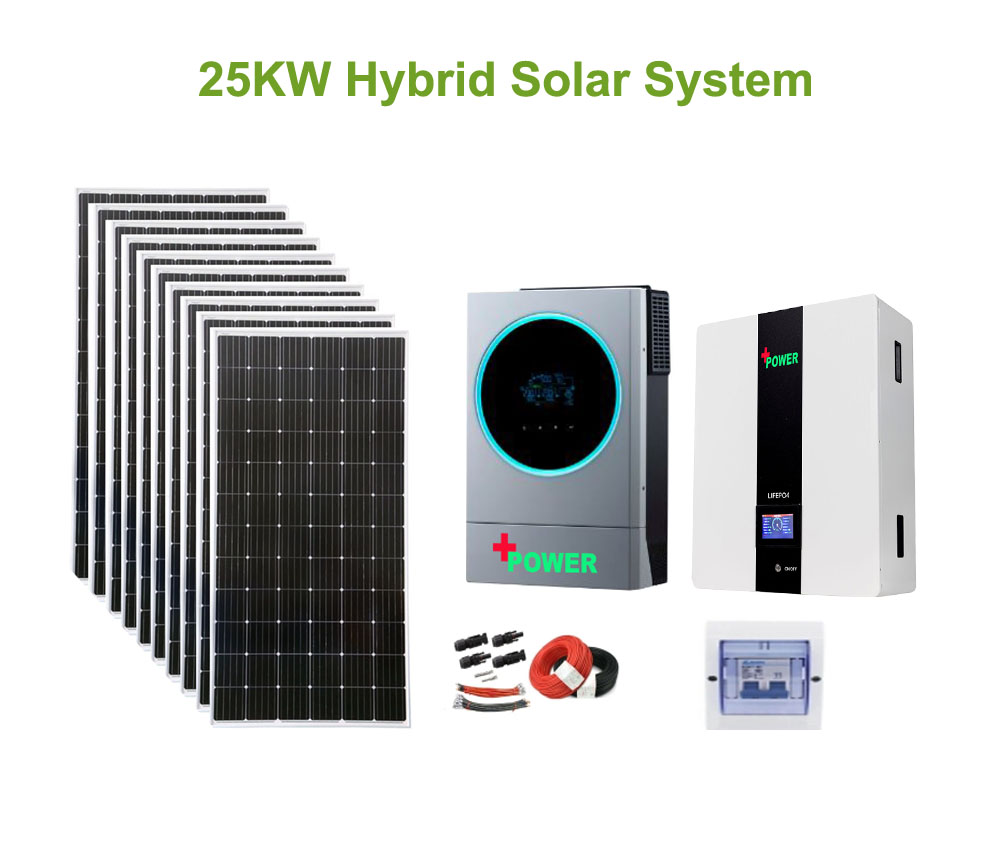
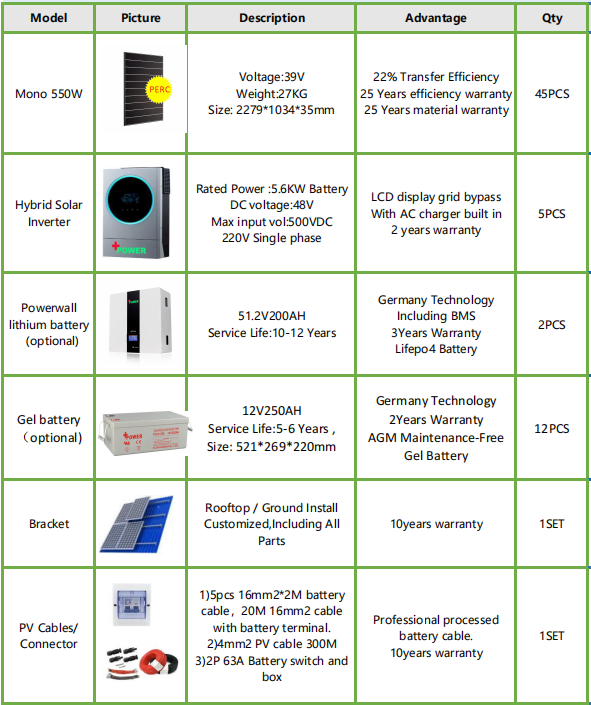
The parts for the Plus Power 25KW hybrid solar power system
The specific components of a “Plus Power 25KW hybrid solar power system” may vary depending on the manufacturer and the configuration chosen, but here is a general list of components commonly found in such systems:
Solar Panels (PV Modules):
Photovoltaic panels that convert sunlight into electricity. The number and capacity of the panels depend on the system’s overall capacity, in this case, 25 kilowatts.
Inverter:
Converts the direct current (DC) generated by the solar panels into usable alternating current (AC) electricity for household or commercial use.
Energy Storage System (Batteries):
Batteries store excess energy generated during sunny periods for use during times when sunlight is not available. This is a key feature of hybrid systems to provide continuous power.
Charge Controller:
Manages the charging and discharging of the batteries, ensuring they are charged optimally and protecting them from overcharging or discharging.
Mounting and Racking System:
Provides the framework to securely install and mount the solar panels. This system ensures the panels are positioned optimally for sunlight exposure.
Monitoring System:
Allows users to track the performance of the solar panels, inverter, and battery storage. This can include real-time monitoring, energy production data, and system diagnostics.
Wiring and Electrical Components:
Various cables, connectors, and electrical components are used to interconnect the solar panels, inverter, charge controller, and batteries.
Power Distribution Unit (PDU):
Manages the distribution of electricity within the system, directing power to where it is needed and ensuring a balanced load.
Disconnect Switches:
Safety devices that allow for the isolation of specific components for maintenance or emergency purposes.
AC and DC Breakers:
Circuit breakers protect the system from electrical faults and allow for the safe disconnection of specific components.
Weatherproof Enclosures:
Enclosures and casings protect electrical components from the elements, ensuring the longevity and safety of the system.
Installation and User Manuals:
Documentation providing instructions for the installation, operation, and maintenance of the system.
Optional Monitoring Software:
Software applications that allow users to monitor the performance of the system remotely, providing insights into energy production and consumption.
It’s important to note that the “Plus Power 25KW hybrid solar power system” may be a specific product or model offered by a particular manufacturer. To get precise information about the components and specifications, it’s recommended to refer to the product documentation provided by the manufacturer or consult with their representatives.
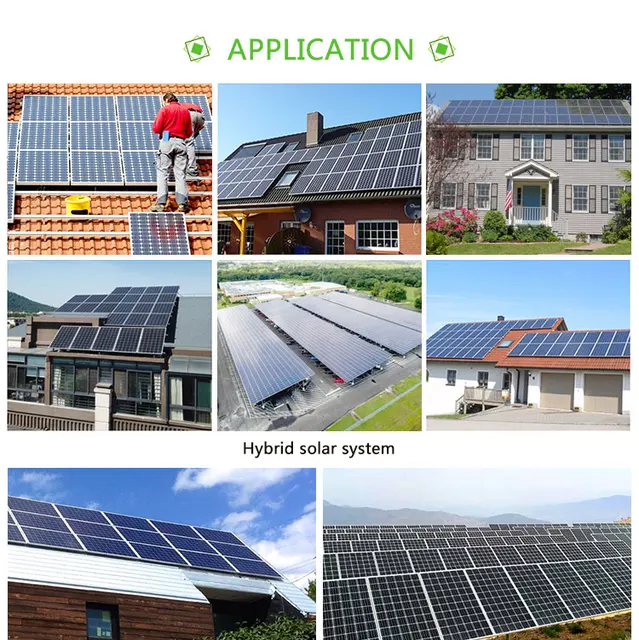
The applications for the 25KW hybrid solar system
A 25KW hybrid solar system has various applications, and its versatility makes it suitable for a range of settings. Here are some common applications:
Residential Power Generation:
The system can be installed on residential rooftops to generate electricity for a home. The hybrid nature ensures a more consistent power supply by storing excess energy for use during periods of low sunlight.
Commercial and Industrial Buildings:
Businesses and industrial facilities can benefit from the 25KW hybrid solar system to offset their electricity consumption, reduce utility costs, and contribute to sustainability goals.
Rural Electrification:
In remote areas where access to the traditional power grid is limited, a hybrid solar system can provide a reliable source of electricity. It’s especially useful for powering homes, schools, and community centers.
Agricultural Operations:
Farms can use the system to power irrigation systems, barns, and other agricultural equipment. The hybrid setup ensures a continuous power supply, even when sunlight is insufficient.
Emergency Backup Power:
The energy storage component of the hybrid system makes it suitable for providing backup power during grid outages or emergencies. Critical facilities like hospitals or emergency response centers can benefit from such setups.
Remote Telecommunications Stations:
Solar hybrid systems are commonly used to power remote telecommunications towers, ensuring connectivity in areas where traditional power sources are impractical.
Educational and Research Institutions:
Universities, research facilities, and schools can integrate these systems as a sustainable energy source, showcasing environmental responsibility and providing hands-on learning opportunities.
Tourist Resorts and Remote Lodges:
Off-grid tourist resorts or lodges in remote locations can use 25KW hybrid solar systems to meet their energy needs without relying solely on diesel generators.
Government and Public Buildings:
Government offices, community centers, and other public facilities can deploy these systems to reduce electricity costs and contribute to renewable energy initiatives.
Environmental Monitoring Stations:
Solar hybrid systems are employed in environmental monitoring stations and research sites where a consistent power supply is crucial for data collection and analysis.
In summary, the 25KW hybrid solar system finds applications in both residential and commercial settings, offering a sustainable and reliable source of electricity while reducing reliance on traditional energy sources. The ability to store excess energy ensures a continuous power supply, making it a versatile solution for various needs.
How to find a good 25kw hybrid solar system?
Finding a good 25KW hybrid solar system involves careful consideration of various factors to ensure it meets your specific needs and provides reliable performance. Here are some steps to help you find a suitable system:
Define Your Energy Needs:
Assess your energy consumption patterns. Determine how much electricity you need, when you need it, and whether you want the system to be grid-tied or off-grid. This information will help size the system appropriately.
Research Reliable Suppliers:
Look for reputable solar system suppliers and manufacturers. Check reviews, customer testimonials, and ratings to gauge the reliability and quality of their products.
Certifications and Standards:
Ensure that the solar panels, inverters, and other components of the system meet industry standards and have the necessary certifications. Common certifications include UL (Underwriters Laboratories) and IEC (International Electrotechnical Commission) for electrical components.
Evaluate System Components:
Examine the specifications of the solar panels, inverters, batteries, and other components. Consider factors such as efficiency, durability, and warranty periods. Opt for well-known brands with a track record of performance.
Get Multiple Quotes:
Obtain quotes from multiple solar system providers. Compare not only the total cost but also the details of the components included in each quote. This will help you make an informed decision based on both price and quality.
Consider System Integration:
Ensure that all components of the system are designed to work seamlessly together. Compatibility between solar panels, inverters, and batteries is crucial for optimal performance.
Review Warranty Terms:
Carefully read and understand the warranty terms for each component of the system. A longer warranty period is generally an indication of the manufacturer’s confidence in the product’s durability.
Check for Local Incentives:
Investigate whether there are any local or government incentives, rebates, or tax credits for installing solar systems. This can significantly reduce the overall cost of the system.
Consult with Professionals:
Seek advice from solar energy professionals or consultants. They can help you assess your specific needs, recommend suitable system configurations, and provide insights into the latest technologies.
Customer Support and Service:
Consider the level of customer support and service offered by the supplier. A reliable customer support system is essential for addressing any issues that may arise post-installation.
Environmental Impact:
If environmental sustainability is a priority for you, consider the environmental impact of the system. Look for suppliers committed to sustainable manufacturing and disposal practices.
Installation and Maintenance:
Inquire about the installation process and ongoing maintenance requirements. Choose a supplier that provides professional installation services and offers maintenance support.
By thoroughly researching and considering these factors, you can find a good 25KW hybrid solar system that aligns with your energy needs and provides reliable and efficient performance over the long term.
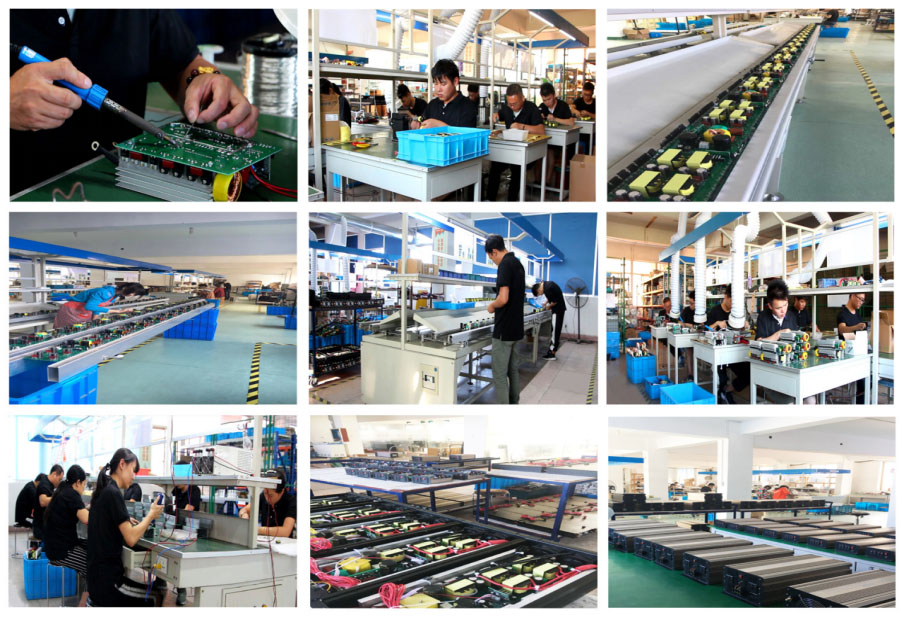
The installation and maintenance of the 25KW hybrid solar system.
The installation and maintenance of a 25KW hybrid solar system involve several steps to ensure optimal performance and longevity. Here’s a general guide:
Installation:
Site Assessment:
Conduct a thorough assessment of the installation site. Ensure that it receives adequate sunlight throughout the day and has sufficient space for the solar panels.
System Design:
Develop a detailed system design based on the energy needs, site conditions, and available space. Consider shading, orientation, and tilt angles for optimal solar exposure.
Permitting:
Obtain any required permits or approvals from local authorities before starting the installation. Compliance with local regulations is crucial.
Component Installation:
Install the solar panels on the mounting and racking system according to the design. Connect the panels using appropriate wiring, and install the inverter, charge controller, batteries, and other system components.
Electrical Connections:
Connect the solar panels, inverter, charge controller, and batteries with the necessary wiring. Ensure proper grounding and adherence to electrical codes.
Inverter Installation:
Install the inverter in a well-ventilated and accessible location. Connect it to the electrical panel and ensure that it is configured correctly.
Battery Installation:
If the system includes energy storage, install the batteries according to the manufacturer’s guidelines. Connect them to the charge controller and inverter.
Testing and Commissioning:
Test the entire system to ensure all components are functioning properly. Verify the performance of the solar panels, inverter, and battery storage. Make any necessary adjustments.
Monitoring System Setup:
Configure the monitoring system to track the performance of the solar system. Set up any required software and user interfaces for remote monitoring.
Final Inspection:
Conduct a final inspection to ensure that the installation complies with safety and quality standards. Verify that all electrical connections are secure and meet code requirements.
Maintenance:
Regular Inspections:
Schedule regular inspections to check for any physical damage, loose connections, or signs of wear. Inspect the solar panels for dirt or debris that may reduce efficiency.
Cleaning:
Clean the solar panels periodically to remove dirt, dust, and debris that can accumulate on the surface. Clean the panels with a soft brush or hose, following the manufacturer’s guidelines.
Battery Maintenance:
If the system includes batteries, monitor and maintain them according to the manufacturer’s recommendations. Check for proper charging, electrolyte levels (for lead-acid batteries), and signs of corrosion.
Inverter Checks:
Regularly check the inverter for proper operation. Monitor its display or use the monitoring system to identify any error messages or performance issues.
Software and Firmware Updates:
Keep monitoring software and inverter firmware up to date. Manufacturers may release updates to improve system performance or address security concerns.
Safety Checks:
Perform safety checks on disconnect switches, breakers, and other safety devices. Ensure that emergency shut-off procedures are known and accessible.
Professional Maintenance:
For more complex maintenance tasks or if issues arise, consider engaging a professional solar maintenance service to perform a comprehensive check and necessary repairs.
Record Keeping:
Maintain a record of inspections, maintenance activities, and any issues encountered. This documentation can be useful for troubleshooting and warranty claims.
By following these installation and maintenance guidelines, you can maximize the efficiency and lifespan of your 25KW hybrid solar system while ensuring a reliable and sustainable source of energy. Regular attention to system performance and prompt resolution of issues will contribute to the long-term success of the solar installation.